

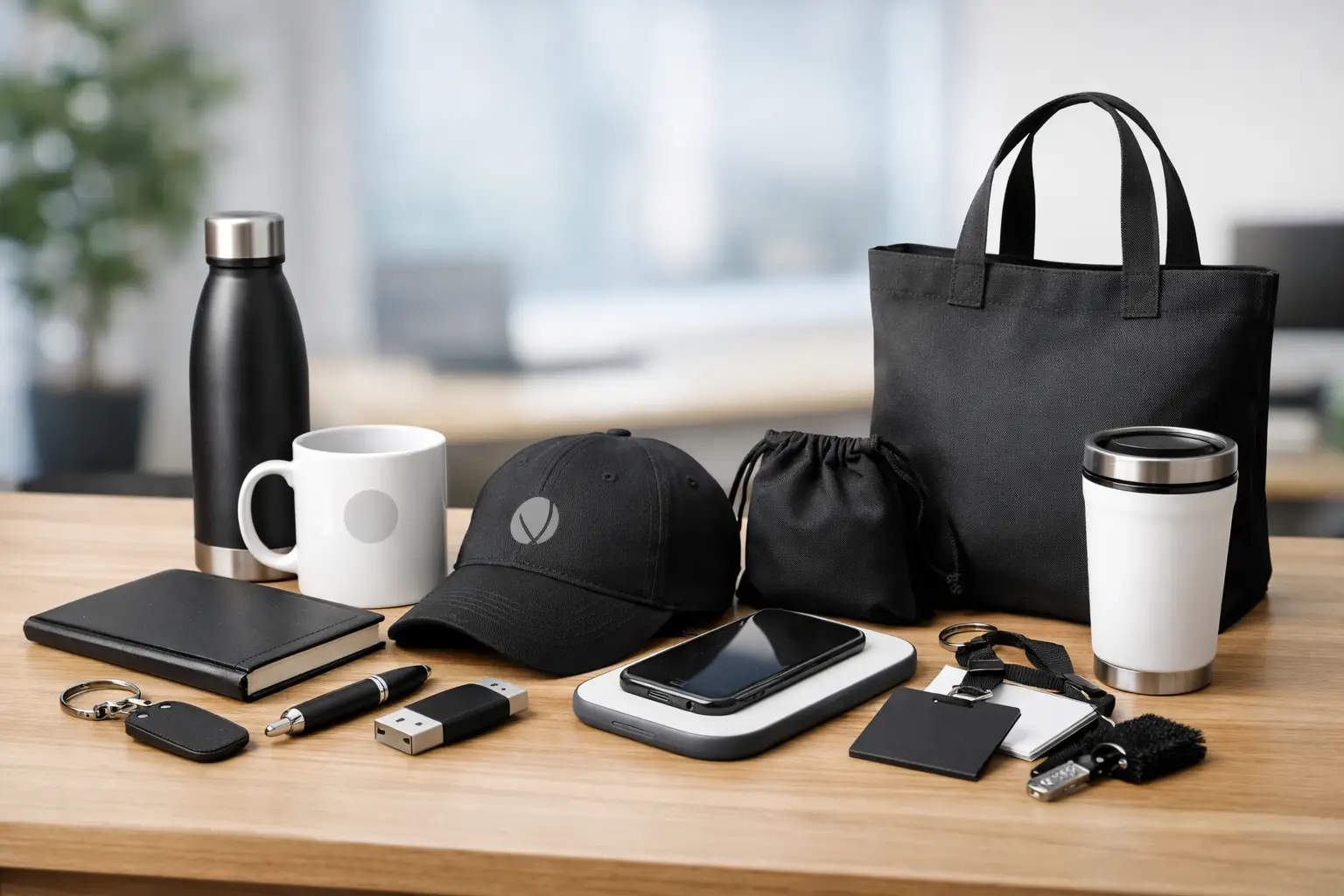
A trade show table with the wrong giveaway is wasted money. A front desk stocked with thoughtful branded materials that people actually keep is a business asset. That is the real difference in business branding and promotional products – they either support growth, or they become another box of leftovers in the storage room.
For small and mid-sized businesses, brand visibility is not a vanity project. It affects whether prospects remember your name, whether customers take you seriously, and whether your team presents a consistent image across every touchpoint. Promotional products can do that work well, but only when they are tied to a real brand strategy instead of a quick order placed before an event.
Why business branding and promotional products work
Promotional merchandise sits in a category many companies underestimate. A digital ad disappears in a scroll. An email gets archived. A useful item on someones desk, in their car, or in their bag stays in circulation. That repeated exposure matters because familiarity builds trust, and trust makes the next call, quote request, or referral more likely.
The catch is that branded merchandise is not automatically effective. A cheap item with weak design can make your business look careless. An overproduced giveaway with no practical use can miss the mark just as badly. The best business branding and promotional products feel intentional. They reflect how your company operates and what your customers expect from you.
If your brand is positioned around reliability, the product should feel dependable. If your business serves field teams, healthcare offices, property managers, contractors, or retail environments, the item should fit that day-to-day reality. Good promotional strategy starts with function, then moves to design and distribution.
Branding first, products second
Many businesses choose the product before they define the brand message. That is backwards.
Before ordering anything, get clear on a few practical questions. What do you want people to remember about your company? Where will they encounter your brand? Are you trying to create local awareness, support a sales campaign, improve client retention, or give your staff a more professional presentation? Those answers should shape the merchandise.
This is where branding becomes operational, not cosmetic. Your logo placement, color choices, print quality, tone, and packaging all communicate something. If your website looks polished but your handout materials and event merchandise look inconsistent, customers notice the gap. If your service is premium but your branded items feel disposable, that gap also shows.
The businesses that get strong returns from promotional products usually treat them as one piece of a larger brand system. Their signage, website, printed materials, uniforms, social presence, and client-facing items all support the same message. That consistency is what makes a brand feel established.
What makes a promotional product worth the investment
Not every branded item needs to be expensive, but it should be useful, well-made, and aligned with the audience. A basic pen can still work if it writes well, looks clean, and reaches the right hands. A premium gift can be worthwhile if it strengthens a high-value client relationship. Cost matters, but relevance matters more.
The strongest product choices usually check four boxes. They are practical, brand-appropriate, easy to distribute, and likely to stay in use. That is why items tied to daily work routines often outperform novelty products. Desk accessories, drinkware, bags, notebooks, apparel, and office-use items tend to last because they solve a small need.
There is also a timing question. The same item can perform very differently depending on when and how you use it. A welcome kit for a new client creates a different impression than a giveaway tossed in a bowl at a conference. A branded item delivered after a successful project can reinforce loyalty in a way that random distribution never will.
Matching the product to the audience
This is where many orders go off track. Businesses often choose based on what they personally like instead of what their customers will use.
If you work with office managers, practical desk and workspace items make sense. If your audience includes field technicians, construction teams, logistics companies, or mobile sales staff, durability matters more than presentation. If you serve executive buyers, cleaner design and higher perceived value tend to carry more weight.
Geography can matter too. In Southern California and Las Vegas, products tied to heat, travel, events, and on-the-go work often make more sense than seasonal cold-weather items. A local business that understands how clients actually operate in its market can make better decisions than a disconnected vendor pushing a generic catalog.
That same logic applies internally. Employee merchandise should not feel like an afterthought. Branded apparel, onboarding kits, and team materials shape how your staff represents the company in the field and in the office. If your employees look organized and consistent, your business feels more organized and consistent.
Where promotional products fit in the sales process
Promotional products are most effective when they support a business objective, not when they are treated as random extras.
At the awareness stage, they help put your name in front of prospects repeatedly. At the relationship stage, they can help a new lead remember your company after a meeting or event. In client retention, they work best as part of a broader service experience – welcome kits, appreciation gifts, referral incentives, or branded materials that improve the customer experience.
They can also support recruiting and internal culture. For growing companies, branded merchandise helps present a more unified operation to new hires and candidates. That matters when you are competing for talent and trying to build a team that represents the business professionally.
The key is alignment. If your company promises responsiveness, organization, and quality, every branded touchpoint should reinforce that promise. If it does not, the merchandise is not helping your sales process. It is creating noise.
Common mistakes that waste budget
The biggest mistake is treating promotional products like a one-time purchase instead of a brand decision. The second is buying based only on unit price.
Low-cost items can be effective, but not when they break, fade, leak, or look sloppy. That kind of product hurts the brand more than it helps. Another common issue is poor design execution. A logo that is too large, too small, badly placed, or printed on the wrong background can make even a decent product look cheap.
There is also the problem of disconnected vendors. One company handles your website, another manages your print materials, another supplies event booths, and someone else sources merchandise. The result is often inconsistent branding, slower turnaround, and too much time spent coordinating details. For busy business owners and operations teams, that fragmented process is a real cost.
An integrated approach works better because the people handling your branding already understand your visuals, your message, and your growth goals. That means fewer revisions, faster approvals, and a better chance that your merchandise actually supports the rest of your marketing and operations.
Business branding and promotional products need accountability
This is where execution matters as much as creativity. Ordering branded products is easy. Ordering the right products, with the right design, at the right time, for the right use case is harder.
A strong partner helps you narrow the options, avoid generic choices, and keep your brand consistent across physical and digital channels. That includes thinking beyond the item itself. Packaging, event setup, fulfillment, staff use, and campaign timing all affect results.
For businesses already juggling IT issues, cybersecurity demands, vendor coordination, marketing needs, and day-to-day operations, adding another disconnected supplier usually creates more friction. A partner that can support both brand execution and broader business infrastructure can remove that burden. That is one reason companies work with KnowIT – not just to get merchandise ordered, but to keep branding aligned with the systems, teams, and customer experience behind it.
Choose products that people remember for the right reasons
The goal is not to put your logo on everything. The goal is to put your brand in the right places, in ways that feel useful, professional, and consistent with how your business operates.
When promotional products are selected with intention, they do more than increase visibility. They help your company look established, stay top of mind, and create a better experience for customers and employees alike. If you are investing in branded merchandise, make it carry its weight. The right product should not just be seen – it should make your business easier to remember and easier to trust.