

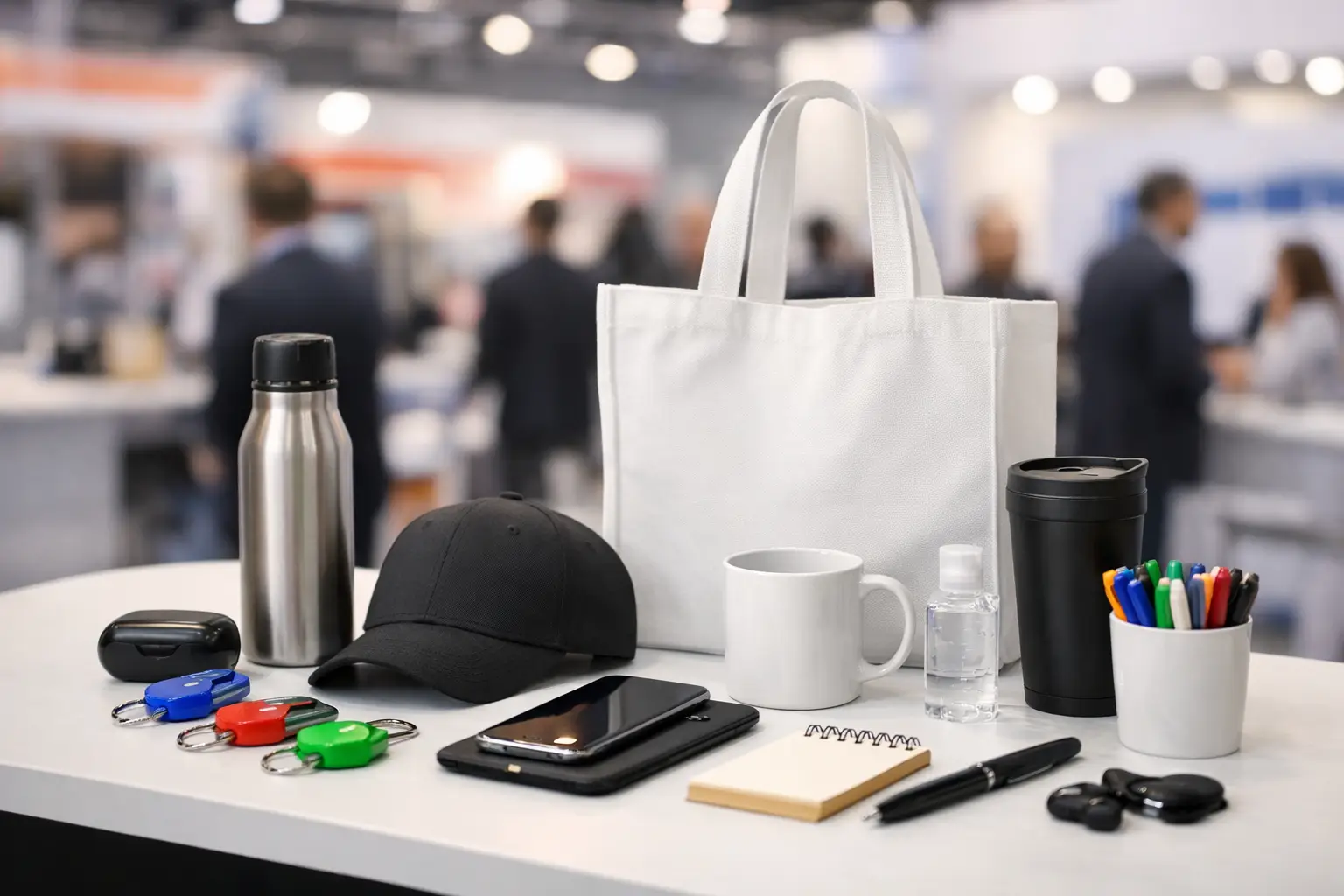
A crowded trade show floor gives attendees seconds to decide whether your booth is worth stopping for. The best promotional products for trade shows do more than display a logo. They give people a reason to engage, make your team easier to remember, and extend your brand’s visibility after the event is over.
For small and mid-sized businesses, the goal is not to hand out the most stuff. It is to create useful, on-brand touchpoints that support real conversations and follow-up. A low-cost giveaway can drive foot traffic. A higher-value item can help your sales team build a relationship with a qualified prospect. The right choice depends on your audience, your offer, and what you want the event to produce.
Start With the Outcome, Not the Catalog
Promotional products work best when they are part of the booth strategy, not a last-minute order placed because every exhibitor needs giveaways. Before selecting an item, decide what success looks like. Are you trying to increase booth visits, collect qualified leads, book consultations, thank current customers, or give your staff a polished and unified look?
A fast-moving community event may call for affordable items you can distribute widely. A B2B technology, healthcare, construction, or professional-services show usually rewards a more selective approach. In those settings, a useful item offered after a meaningful conversation can carry more weight than a pile of inexpensive giveaways.
Your product should also match the action you want attendees to take. If you want scans, demonstrations, or meetings, make the giveaway part of the exchange. Avoid making it difficult or overly transactional. A simple message such as, “Scan your badge for a charger kit,” gives visitors a clear reason to connect while helping your team identify interest.
12 Best Promotional Products for Trade Shows
1. Branded tote bags
Tote bags remain one of the smartest trade show choices because attendees actively need them. Conference materials, samples, brochures, and other giveaways add up quickly. A durable bag with a clean design turns attendees into walking visibility for your booth across the show floor.
Choose a quality fabric and a design that can be recognized from several feet away. Skip overcrowded artwork. Your logo, a short value statement, and a strong brand color usually do more than a paragraph of copy.
2. Insulated tumblers and water bottles
A good tumbler or reusable bottle earns a place on a desk, in a car, or at the gym. That repeated use makes it particularly valuable for businesses with longer sales cycles. It also feels more substantial than a disposable item, which can improve perception before a prospect has even heard your pitch.
The trade-off is cost. Reserve premium drinkware for qualified leads, scheduled meetings, customer visits, or a limited giveaway campaign rather than placing it in an open bowl for anyone to grab.
3. Portable phone chargers
Dead phones are a real problem at large events. A branded power bank or compact charging accessory solves an immediate need, which is exactly what makes it memorable. It also aligns naturally with technology, operations, and service-based brands that want to be associated with reliability.
Confirm the item is dependable before committing to a large order. A low-quality charger can create the opposite impression of the one you intend to make. For many teams, compact charging cables or multi-device charging kits offer a more budget-friendly alternative.
4. Cable organizers and tech pouches
Most professionals carry chargers, earbuds, adapters, and cords. A branded cable organizer or small tech pouch is practical without being overly expensive, and it fits especially well at business, technology, and operations-focused events.
These products are also easy to pair with other items. A pouch containing a charging cable, webcam cover, or microfiber screen cloth can feel like a complete branded kit instead of another random giveaway.
5. High-quality pens
Pens are common for a reason: people use them. The difference is quality. A smooth, comfortable metal pen with subtle branding has a far better chance of staying in a prospect’s bag or desk drawer than a lightweight plastic pen that stops working after a week.
Pens are ideal for broad distribution, event check-in tables, and leave-behind materials. They are less effective as the main attraction for a booth, so use them as a dependable supporting product rather than your only engagement tool.
6. Notebooks and meeting pads
A well-designed notebook makes sense at any conference where people are taking notes, attending sessions, or comparing vendors. It gives your brand repeated exposure during and after the event while looking professional in front of colleagues.
For a stronger impression, choose a notebook that feels intentional: a sturdy cover, clean imprint, and practical page count. A small notepad can work for high-volume events, but larger notebooks are better reserved for conversations with decision-makers.
7. Webcam covers and screen-cleaning kits
Small privacy and device-care items are practical conversation starters, especially for companies serving offices, remote workers, or security-conscious organizations. A webcam cover can lead directly into a discussion about cyber hygiene. A screen-cleaning kit reinforces the idea that your company pays attention to the details.
These are low-cost additions with a clear business angle. They are most effective when your booth team knows how to connect the product to the service or expertise behind it.
8. Branded apparel
T-shirts, quarter-zips, hats, and socks can create strong brand visibility, but apparel needs a plan. Sizing makes open distribution harder, and generic designs often end up folded in a drawer. The best apparel looks like something someone would choose to wear, not an advertisement they feel obligated to accept.
Use apparel for staff uniforms, customer appreciation, contests, or pre-scheduled meetings. Matching shirts or polos also make your booth team easy to identify in a busy hall and create a more organized presence.
9. Travel and comfort items
Travel-size hand sanitizer, lip balm, luggage tags, neck pillows, and compact first-aid kits fit well at conferences where attendees are flying in or spending long days on their feet. These products earn attention because they solve small, immediate problems.
Consider the event environment. Hand sanitizer may be highly useful at a high-traffic convention, while luggage tags make more sense for a destination conference. Relevance is what prevents a giveaway from feeling generic.
10. Snack kits and branded treats
People remember the booth that helped them through the 3 p.m. energy drop. Individually packaged snacks, mints, coffee packets, or branded cookie boxes can increase traffic and give your team a natural opening line.
Food is perishable and can be difficult to transport, so it is not always the simplest option. Still, it works well for regional events, customer meetings, and targeted hospitality efforts. Keep ingredients and dietary considerations in mind when selecting products.
11. Desk accessories
Phone stands, sticky-note sets, mouse pads, wireless charging pads, and desktop organizers can deliver long-term value when they are genuinely useful. A phone stand with a clean imprint may remain visible in a workspace for months.
Desk items are particularly effective when your audience works in offices, clinics, front desks, or home offices. They should be compact enough to travel easily, because attendees will not carry bulky items across a convention center or onto a flight.
12. A tiered giveaway kit
Sometimes the best product is not one product. A tiered giveaway strategy lets you control costs while giving your team options. Offer a simple item to general attendees, a more useful item for scanned leads, and a premium gift for qualified opportunities or existing customers.
For example, a booth may use pens or screen cloths for walk-up visitors, notebooks or cable kits for lead captures, and insulated tumblers for booked consultations. This approach keeps premium inventory in the hands of people most likely to become customers.
Make the Product Work With Your Booth Experience
The giveaway should never carry the entire trade show strategy. Your booth design, staff training, message, follow-up process, and lead capture method matter just as much. A great product cannot fix a confusing offer or a team that is focused on chatting with each other instead of greeting visitors.
Give staff a simple reason to talk about each item. If you hand out a charging kit, connect it to uptime, responsiveness, or keeping teams productive. If you offer a notebook, use it to start a conversation about planning, growth, or operational organization. The product creates the opening. Your team creates the business value.
Also think beyond the logo. A clear message, short QR code callout, or useful tip can make an item more actionable. Keep it readable and avoid cramming every service into a two-inch imprint area. People should understand who you are and what to do next in a glance.
Avoid the Common Giveaway Mistakes
The cheapest option is not always the most cost-effective. Items that break, leak, fade, or feel disposable can quietly damage brand perception. The same goes for ordering too many premium items without a distribution plan.
Avoid products with no connection to your audience or event. A novelty item may earn a laugh, but it rarely earns desk space. Ask a practical question before approving any product: Would the right prospect use this again next week? If the answer is no, consider whether the budget would work harder in a better item, stronger booth display, or a more disciplined follow-up campaign.
For organizations balancing technology, marketing, and day-to-day operations, coordination matters. KnowIT can help align promotional merchandise with the same brand, campaign, and business goals behind your broader marketing effort, so your trade show presence does not feel disconnected from everything else you do.
The product attendees keep is usually the product that solved a small problem at the right moment. Choose that kind of useful, make the branding easy to recognize, and give your team a clear next step for every conversation it starts.