

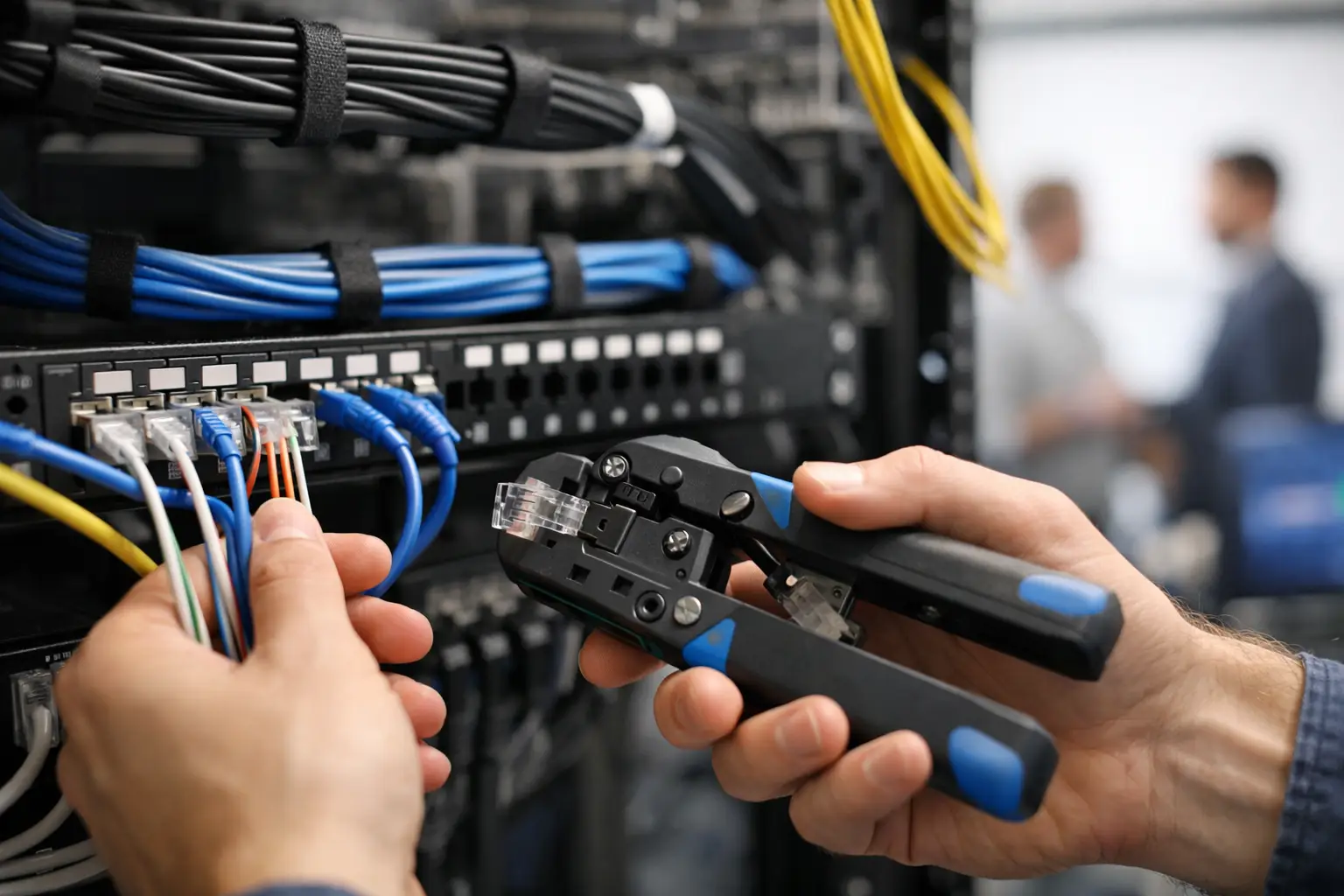
A new office can look finished long before it is ready to work. The walls are painted, desks are in place, and the internet provider has arrived, but the phones, Wi-Fi access points, cameras, door readers, and conference room displays still need a dependable path to communicate. That path is low voltage wiring. If you are asking, what is low voltage wiring, the practical answer is this: it is the structured cabling and connected infrastructure that carry data, controls, audio, video, and security signals throughout your business.
For a growing company, low voltage wiring is not a background construction detail. It directly affects uptime, security coverage, employee productivity, visitor access, and how easily your space can adapt when your team or technology changes.
What Is Low Voltage Wiring?
Low voltage wiring uses electrical systems that operate at lower voltages than standard power circuits. Standard outlets and major equipment typically rely on line voltage, often 120 volts in a commercial U.S. setting. Low voltage systems generally run signals or power at a lower level, commonly through Ethernet, coaxial, fiber-optic, speaker, alarm, or control cables.
The distinction matters because the cable, installation method, testing requirements, and technicians involved are different. An electrician may handle line-voltage power for outlets and lighting, while a low voltage contractor designs and installs the cable pathways that support your network, communications, security, and connected devices.
Some systems overlap. Power over Ethernet, or PoE, lets one Ethernet cable provide network connectivity and low-voltage power to devices such as wireless access points, VoIP phones, IP cameras, and door access readers. That can reduce the need for a separate electrical outlet at every device location, but it still requires proper network design, switching capacity, cable selection, and installation.
Where Businesses Use Low Voltage Wiring
Most businesses rely on more low voltage infrastructure than they realize. It is behind the technology employees use every day and the systems that keep buildings safer and more manageable.
A properly planned installation may support:
- Structured data cabling for computers, printers, servers, and network switches
- Wi-Fi access points and cellular signal support equipment
- VoIP phones, paging systems, and conference room communications
- IP security cameras, video recorders, and remote monitoring
- Door access control, intercoms, and visitor entry systems
- Alarm, fire alarm, and building automation systems
- Audio, video, digital displays, and meeting room equipment
- Fiber backbone cabling between floors, suites, buildings, or network closets
The exact mix depends on your facility. A medical office may prioritize secure network drops, access control, cameras, and reliable guest Wi-Fi. A warehouse may need high-mounted access points, camera coverage across loading areas, paging, and fiber connections between offices and operational zones. A professional services firm may need polished conference rooms, desk-side network access, and dependable phone service.
Why Structured Cabling Beats a Patchwork Fix
It is tempting to treat cabling as a last-mile problem: run a cable where someone needs one, add a switch when ports run out, and use wireless wherever a connection is inconvenient. That approach may work temporarily, but it often creates a network that is difficult to troubleshoot, expand, or secure.
Structured cabling organizes the physical network around a central design. Cables run from work areas and devices to telecommunications rooms, terminate on labeled patch panels, and connect through managed network equipment. The result is easier maintenance and clearer accountability. When a user loses connectivity, your IT team can identify the device, cable run, port, switch, and network policy without guessing what is hidden above the ceiling.
Good cable management also protects your investment. Cables should be routed through appropriate pathways, separated from sources of electrical interference where required, terminated correctly, labeled consistently, and tested before the project is complete. Clean work is not cosmetic. Poor terminations, damaged cable, unsupported runs, and undocumented changes can create intermittent issues that waste hours of staff time.
The Business Impact of Low Voltage Wiring
Low voltage wiring is often discussed in technical terms, but the business case is straightforward: reliable infrastructure gives people the tools to do their jobs without unnecessary interruption.
A strong network cabling foundation improves Wi-Fi performance because access points can be placed where coverage is needed, not only where an old cable happens to exist. It supports better cybersecurity because cameras, access systems, employee devices, and guest networks can be segmented and managed appropriately. It also improves scalability. Adding employees, rooms, cameras, or a new location becomes a planned expansion instead of an emergency workaround.
There is a financial side, too. Replacing cabling after a remodel is complete can mean opening finished walls, moving furniture, disrupting staff, and paying for rework. Installing the right pathways and extra capacity during construction or renovation is usually far more cost-effective. You do not need to wire every possible future device on day one, but you should create a design that makes future additions practical.
Low Voltage Wiring for Offices, Retail, and Multi-Site Teams
Each environment has different priorities, so there is no one-size-fits-all cabling plan.
An office buildout may center on desk locations, conference rooms, secure network closets, access points, and phones. Retail locations may prioritize point-of-sale connectivity, camera coverage, digital signage, guest Wi-Fi, and reliable connections at the front counter. Multi-site organizations often need standardized rack layouts, labeling, camera configurations, and documentation so every location can be supported consistently.
For companies in leased space, coordination is particularly important. Landlord rules, building pathways, shared telecom rooms, ceiling types, after-hours access, and local permit requirements can influence the scope and cost. A site walk before finalizing a quote helps identify those conditions early, before they become a delay during move-in week.
Planning a Low Voltage Installation the Right Way
The best time to plan low voltage wiring is before walls close, but existing offices can still be upgraded effectively. Start with the work your business needs to perform, not just a list of devices. Consider how many people need wired connections, where coverage drops today, which doors require controlled access, what areas need camera visibility, and how your team will use meeting spaces.
Then consider growth. If you expect to add staff, introduce more cameras, or expand into adjacent space, build that into the design. Running additional cable or installing conduit while access is open can prevent expensive disruption later.
The cabling category matters as well. Cat6 is common for many business networks, while Cat6A may make sense for higher-bandwidth needs, longer 10-gigabit runs, or environments with greater future capacity requirements. Fiber is often the better choice for longer distances, connections between buildings, and high-speed backbone links. The right answer depends on distance, bandwidth, budget, building conditions, and your technology roadmap.
A professional scope should also cover rack design, patch panels, cable labeling, certification testing, documentation, and coordination with your IT setup. Installation without testing and documentation leaves your business with cables in the wall but no reliable record of what they support.
Common Mistakes That Create Expensive Problems
The most common mistake is underestimating capacity. A network closet with too few ports, limited power, poor ventilation, or no room for future equipment becomes a bottleneck quickly. Another is relying entirely on Wi-Fi for stationary devices that need consistent performance. Wireless is essential, but wired connections remain valuable for desktops, printers, conference room systems, switches, and cameras.
Businesses also run into trouble when security systems are installed separately from the network that supports them. A camera system, access control platform, and office network should not be treated as unrelated projects. They share physical infrastructure, bandwidth, power considerations, cybersecurity requirements, and support responsibilities.
Finally, do not assume all low voltage systems have the same permitting and code requirements. Fire alarm work, for example, may require specialized design, approvals, inspection, and licensed installation. A qualified provider should identify the boundaries of the project and coordinate the right resources rather than treating every cable run as identical.
Choose a Partner Who Can Support the Whole Environment
Low voltage wiring works best when the people installing it understand what happens after the walls are closed. The physical cable plant must support the network, cybersecurity policies, cloud phones, cameras, access control, Wi-Fi, and future service needs.
KnowIT approaches low voltage work as part of the full business technology environment. That means designing with the operational goal in mind, installing clean and tested infrastructure, and helping ensure the equipment connected to it is configured to perform. For businesses across Southern California and the Las Vegas metro area, having one accountable team for field deployment and ongoing IT support can eliminate the handoffs that slow projects down.
Your cabling should not be the reason a move, remodel, or technology upgrade becomes chaotic. Plan it early, document it well, and build enough flexibility into the design that your next business decision does not require tearing into finished walls.